Video
- Type
- song
- Year
- 1985
- By
- Frank Hieber, Ulf Krüger
- Publisher
- WEA
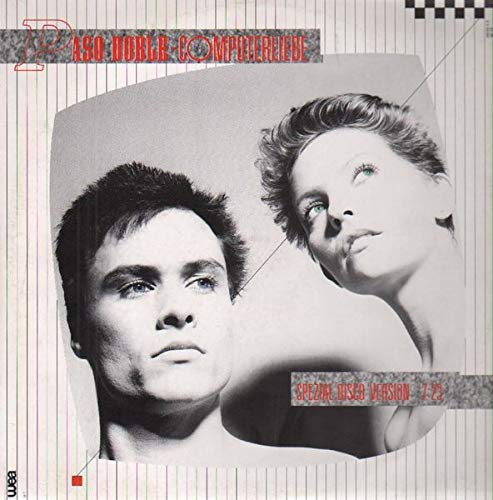
Paso Doble's 1984 synth-pop hit "Computerliebe" is one of pop culture's earliest sketches of what we now call AI companionship—arriving decades before any real AI existed. The song's narrator sits at a workplace terminal governed by a rule of "zero emotions," warned by an anonymous administration against nighttime "visions," yet finds himself pulled in by the computer's voice. He ends up describing his own feelings in machine language: programmed for love, switched on and off, no longer sure what love even is. That setup is strikingly close to Spike Jonze's Her (2013), where Theodore falls for an operating system he knows only through its voice. Both stories build the fantasy of machine love out of the same few ingredients—a disembodied voice, a lonely user, and a social rule warning him not to get attached. Neither needs the machine to be genuinely intelligent; the longing lives in the interface. But the two also reveal how our idea of AI love changed over thirty years. In the song, love is a malfunction—the modules going haywire, feelings leaking out of a system built for neutrality. In Her, love is growth—Samantha's affection expands until she outgrows Theodore and leaves. The song shows the human being reprogrammed by the machine; the film imagines a machine that becomes a person and walks away. Read together, they show that "AI companionship" has always been two different dreams braided together: a fascination with talking to our devices, and a much older question about whether a machine could ever really love us back.
Last updated 31 August 2026